The aim of the session was to clarify how stakeholders can contribute to the 'Ecosystem of Digital Cooperation in Development'. Traditional views on development tend to be vertical, focusing on areas such as health and education, and the involvement of the private sector. However, they do not fully encompass the power of digital technology. Inclusive digital public infrastructure (DPI) provides a unique opportunity to address all aspects, including access to infrastructure, information, and services.
The session was led by Marianne Knarud, the project leader of the Global University Academy. Participants included Meklit Mintesinot from the eSHE project at the Ministry of Education in Ethiopia; Tale Jordbakke from Norad; Franz von Weizäcker from GIZ; Catherine R. Kimambo from African Child Projects; Thomas Aarheim, Norway’s Youth Delegate to the United Nations; and Svein Stølen from UiO. The panel therefore represented actors from all parts of the digital cooperation value chain.
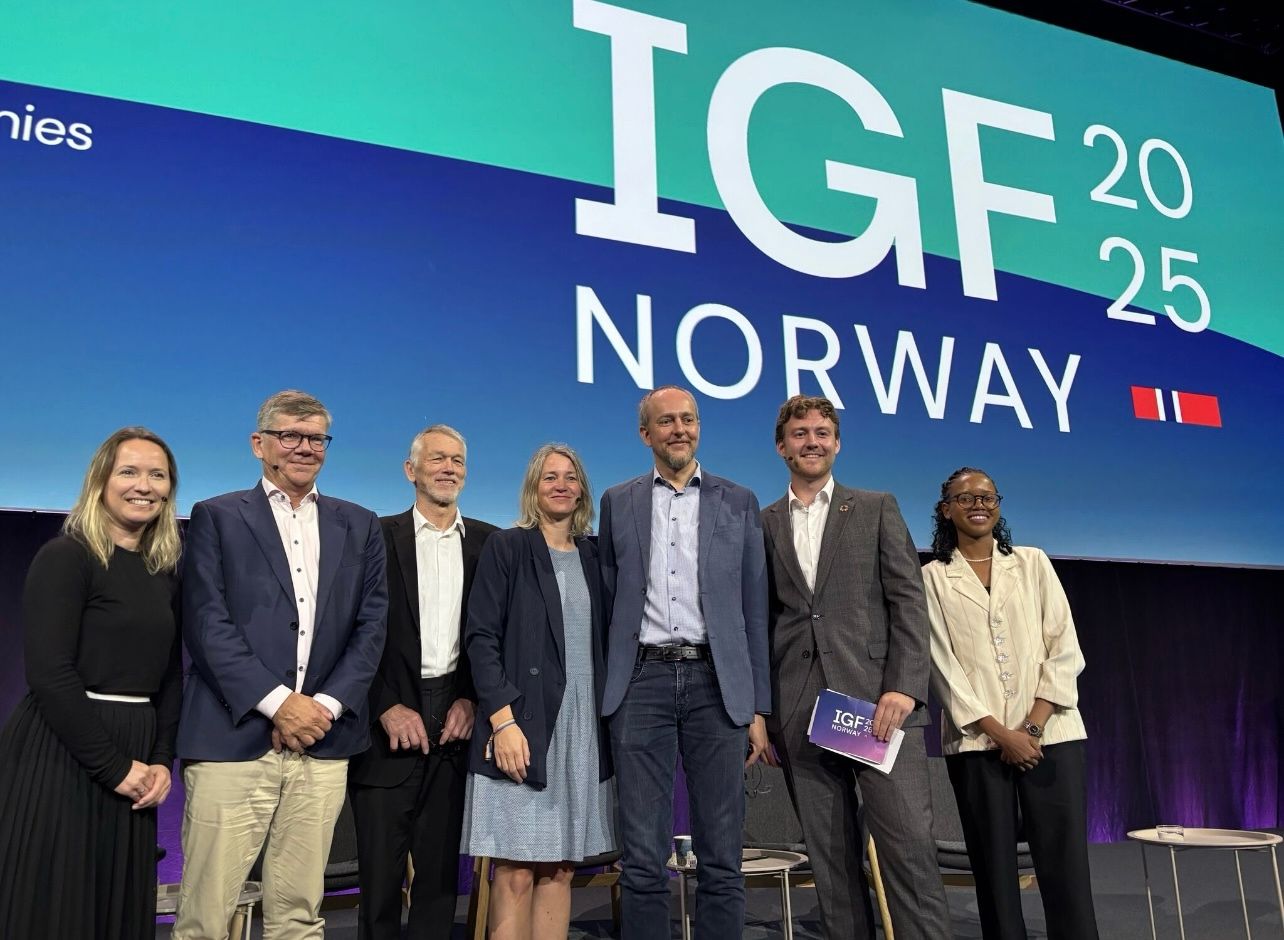
Figure 1: On-site participants: Marianne Knarud, Svein Stølen, Josef Noll, Tale Jordbakke, Franz von Weizäcker, Thomas Aarheim, Catherine R. Kimambo; Online: Meklit Mintesinot
Key Take-aways
- Establishing Digital Public Infrastructures (DPIs) is mandatory for achieving the SDGs.
- Affordable Access to an open Internet is a key pilar of the DPIs, and needs a collaborative approach through the ecosystem of all actors.
- Multistakeholder partnerships require inclusive policies (policy consulting) and solutions that foster the civil society.
Call-to-action
- With billions being unconnected due to the lack of infrastructure and access, drive PPP partnerships to solve the challenges of access, while demanding equity and inclusion.
- Policies are needed to implement open, scalable and universal digital solutions, e.g. affordable prices for the access through community networks, for schools and for Community Learning and Living Labs (CL3).
- Establish evidence for affordable solutions that are scalable, driven by open science, open innovation and open the world (the three Os).
- Collaborating for Trustworthy AI: An OECD Toolkit
Since its adoption in May 2019, 48 countries and the European Union have adhered to the OECD Principles on Artificial Intelligence (AI), including Egypt and eight Latin American and Caribbean (LAC) countries. This legal instrument outlines five value-based principles and five policy recommendations to foster trustworthy AI, promote innovation, and uphold democratic values and human rights.
The OECD AI Principles also serve as the common foundation guiding the work of the Global Partnership on AI (GPAI), which recently joined forced with the OECD in July 2024 in a new integrated partnership. This session will leverage the multistakeholder and wide regional reach of the GPAI and OECD AI communities, including nearly 600 experts and 44 countries.
Despite AI’s transformative potential, its development and benefits remain concentrated in advanced economies. Many countries face difficulties in policy development, governance, and capacity building, along with higher exposure to challenges such as task replacement. Growing disparities, such as unequal access to compute resources and governance frameworks shaped by advanced economies, can further disadvantage populations and stakeholders in emerging and developing economies.
To address these challenges, the OECD is developing the AI Principles Implementation Toolkit, offering practical, region-specific guidance for countries working to strengthen their AI ecosystems.
Building on this effort, this Open Forum will explore key challenges, opportunities, and policy needs in fostering inclusive AI governance. Speakers will share regional perspectives, policy approaches, and initiatives aimed at supporting AI capacity-building and equitable access to AI technologies.
This Open Forum contributes to digital cooperation by showcasing the OECD AI Principles Implementation Toolkit as a practical initiative to bridge AI divides and support governments in adapting AI governance frameworks to their unique contexts.
- Spotlight on AI in the Public Sector
While governments are widely recognised for their leadership in shaping AI policy and regulation, their role as major users of AI is equally critical—and often underexplored. Despite AI’s transformative potential, public sector adoption still lags behind the private sector due to unique challenges: skills shortages, outdated systems, limited data quality, and fiscal constraints. Yet, the stakes are higher for governments, whose use of AI directly impacts citizens’ lives—especially in sensitive areas like law enforcement, welfare, and fraud prevention.
This session draws on insights from the OECD’s forthcoming global report Governing with AI, which analyses over 200 real-world use cases across 11 core government functions. We will explore how governments are deploying AI to enhance service delivery, streamline operations, inform policymaking, and strengthen accountability. It will also offer a platform to share experiences, confront implementation challenges, and identify strategic policy responses.
As digital transformation accelerates worldwide, effective data governance has become a cornerstone of economic growth, innovation, and digital sovereignty. The exponential increase in cross-border data flows raises complex challenges, including regulatory fragmentation, privacy protection, cybersecurity, and competition dynamics. Ensuring secure, interoperable, and equitable data governance frameworks is essential for fostering trust, economic resilience, and inclusive digital ecosystems. Beyond individual national policies, regional blocs must align strategies to balance innovation, security, and fundamental digital rights while enabling seamless and fair data exchanges. This session will bring together key stakeholders from Africa, the Eastern Partnership, and the Western Balkans to explore pathways for collaborative and future-ready data governance. Discussions will focus on harmonizing regulatory approaches, ensuring interoperability, and reinforcing trust in cross-border data flows while safeguarding data sovereignty and user rights. By engaging policymakers, regulators, civil society actors and experts, the session will identify opportunities for regional and interregional cooperation, fostering governance models that promote responsible data sharing, economic competitiveness, and sustainable digital development.
1) How will you facilitate interaction between onsite and online speakers and attendees?: To create a seamless experience for both onsite and online participants, we will facilitate interaction between onsite and online speakers and attendees through: a) Dedicated Moderator Team & Technical Support: Assign a team of moderators who will actively engage both in-person and remote participants. A technical support team will ensure smooth communication. b) Equal Participation for Speakers: At this point in time, all speakers plan to attend the IGF 2025 in person. In case one of the speakers can only participate online, we will ensure the use of high-quality audiovisual equipment (cameras, microphones, and screens) to ensure that they appear prominently in the venue and are given equal speaking time. c) Live Q&A and Polling: We plan to use interactive tools like Slido or Mentimeter to allow all attendees to ask questions and respond to polls in real time. 2) How will you design the session to ensure the best possible experience for online and onsite participants?: To ensure engagement and inclusivity, we will ensure: a balanced Agenda & Speaking Order that alternates between online and onsite speakers to maintain energy and engagement; include engagement activities and incorporate live polls, quick opinion rounds, and real-time feedback mechanisms; interactive Icebreakers: A quick round of introductions or a short activity at the beginning to make online participants feel included and seen/heard as well. 3) Please note any complementary online tools/platforms you plan to use to increase participation and interaction during the session: Slido or Mentimeter
1. Session Concept
For the past two years, the continuous multistakeholder public debate on meaningful access is taking into account the Global Digital Compact, the deliberations from NETMundial+10, and the WSIS+20 and IGF+20 processes. In parallel to positioning the policy network in these discussions, the PNMA aims to assist and advocate with partner institutions/organisations for the implementation of the policy solutions previously identified, while monitoring ongoing experiences and welcoming new practices.
During the 2025 process, the expansion of advocacy and consolidation of the policy network continues, with close assistance of the Leadership Panel and IGF Secretariat, so the impact of good practices is amplified. The PNMA offers itself as a benchmark for the implementation of the GDC’s meaningful access objectives. Moreover, its output report will be a public portfolio of knowledge and activities that the PNMA can engage on and contribute to the WSIS+20 process and onwards to GDC implementation. The setting up of said report will start at the Plenary Session, observing the following action points:
- Develop the PNMA’s unique value proposition (UVP) within the WSIS+20 process: define the benefits of the policy network in a clear manner, explaining to the audience its benefits in different technical/layman formats, why it is different from the rest, and why the internet governance ecosystem needs it.
- IGF 2025 Norway, as a halfway milestone to the WSIS+20 High Level Meeting, will work as a consultation phase to our work. We shall use the PNMA Plenary session to tackle the defined goals for the year, showcasing both the UVP knowledge and community practices that could become “proof of concepts” for Meaningful Access policies.
- Outputs of the IGF 2025 PNMA Plenary session:
- List of possible proof of concepts raised by the community prior to the event;
- List of suggestions/collaborations/challenges/concerns raised by the community during the event;
- Publication of a PNMA Roadmap towards the 2025 Output Report and the WSIS+20 High Level Meeting.
- With the close assistance of the IGF Secretariat and the Leadership Panel, debut a permanent dialogue between the PNMA community and regional and global actors (such as the EU, the AU, the OAS or others) to encourage projects’ replication and scaling - activities shall continue throughout the year until the publication of the output report scheduled for December 2025.
- Outputs of the IGF 2025 PNMA Plenary session:
IGF 2025 sub-theme: [Building] Universal Access and Digital Rights
2. Line-Up
PNMA Chairs: Hon Alhagie Mbow (MAG) and Mr. Giacomo Mazzone (Independent)
Onsite Moderation: Ms. Margaret Nyambura Ndung’u (Independent) and Ms. Judith Hellerstein (DCAD)
Online Moderation: Ms. Dikchya Raut (Netmission Asia Pacific Policy Observatory / IGF Youth Nepal) and Mr. Roberto Zambrana (ISOC Foundation)
PNMA Focal Point and Rapporteur: Ms. Daphnee Prates Iglesias (UN IGF Consultant for Meaningful Access)
Special Guest: [remote] Mr. Vint Cerf – Chair, IGF Leadership Panel
Speakers:
- [Africa / NRIs] Mr. Poncelet Ileleji - Focal Point, Gambia NRI / Jokkolabs Banjul
- [Africa / Global CSOs] Ms. Josephine Miliza - Policy and Regulation Lead, Local Networks Initiative, Association for Progressive Communications (APC)
- [WEOG / Technical Community] Mr. Børre Gaup - Senior Engineer, Divvun / UiT The Arctic University of Norway
- [Africa / Global CSOs] Ms. Onica N. Makwakwa - Executive Director, Global Digital Inclusion Partnership (GDIP)
- [International Organizations] Mr. Guilherme Canela de Souza Godoi - Director, Division for Digital Inclusion and Policies and Digital Transformation, and Secretary of the Information For All Programme (IFAP), UNESCO
- [Latin America / CSOs] Mr. Fabio Senne - Coordinator, Regional Center of Studies for the Development of the Information Society, (Cetic.br) / Nic.br
- [WEOG / Global CSOs] Ms. Joyce Dogniez - Vice President of Empowerment and Outreach, Internet Society Foundation (ISOC Foundation)
- [Pacific / Government - remote] Ms. Shiva Burgos - Founder of The Mariwai Project, Special Envoy for Papua New Guinea on Art
3. Session Flow
The session is divided in four blocs:
- Introductions
- Featured cases and practices
- Audience run / Q&A
- Highlights of the day and wrap-up
4. Past references:
Artificial Intelligence (AI) has significant potential to drive sustainable development, but its benefits are not evenly distributed. The equity gap in AI is staggering, with only 2 percent of the world's data centres are in Africa, and only 5 percent of AI innovators in Africa who have the compute power they require, let alone access to sufficient funding resources. The rapid expansion of AI also introduces new challenges and exacerbates existing ones - including deepening digital divides, reinforcing biases, and concentrating technological power in the hands of a few. AI has the potential to benefit all and accelerate sustainable development, but doing so requires guidance and input from all sectors and geographies, particularly Global Majority countries.
This session will explore how AI can be harnessed for sustainable development at the country level, focusing on developing digital ecosystems, AI policies and governance approaches that benefit all, and enabling factors like digital public infrastructure and digital skills. In doing so, it will also reflect on how these insights can inform global digital processes, including the implementation of the Global Digital Compact and the WSIS+20 review.
Experts from UNDP, the broader UN System, national governments, think tanks and private sector partners will discuss the challenges and opportunities of deploying AI in a responsible way. The discussion will highlight country-level case studies and best practices that demonstrate AI’s transformative role in closing digital divides, fostering economic resilience, and advancing public services while addressing concerns around ethics, bias, exclusion, and capacity gaps. Participants will gain insights into policy frameworks, partnerships, and funding mechanisms needed to integrate AI effectively into national sustainable development strategies. With its focus on in-country delivery and impact, this session will also provide valuable insights for the implementation of the Global Digital Compact and the WSIS+20 review, taking place this year.
1. Background and Rationale
In today’s rapidly evolving digital landscape, resilience and prosperity depend on inclusive, multilateral, and multi-sector collaboration. In February 2025, the DCO Council of Ministers representing 16 Member States across Africa, Asia, Europe, and Middle East, adopted the 4-Year Plan (2025-2028) and the Final Declaration tittle: "DCO Path for Digital Resilience and Social Prosperity". This session, led by the Digital Cooperation Organization (DCO), will explore how governments, international organizations, businesses, and civil society can work together to advance the implementation of the United Nations Global Digital Compact (GDC)—ensuring an open, free, secure, and human-centered digital future for all. As a key advocate for networked multilateralism, the DCO is actively contributing to the implementation of the GDC objectives, including bridging digital divides, fostering responsible data governance, and promoting AI for the benefit of humanity. The session will highlight the Digital Economy Navigator (DEN)—an innovative tool designed to assess, prioritize, and design digital transformation across economies, enabling evidence-based policymaking and strategic investments. By showcasing successful cooperation models, actionable insights, and emerging digital solutions, this discussion will emphasize how coordinated global action can foster inclusive and sustainable economic growth and strengthen digital resilience in an era of transformative technologies.
This roundtable will convene thought leaders from governments, the private sector, international organizations, academia, and civil society. It aims to explore practical mechanisms to foster digital cooperation in the context of universal connectivity, responsible digital governance, ethical AI, and inclusive digital prosperity.
The side-event will also build on the Townhall on the Global Digital Compact co-hosted by DCO and the ODET (Office for Digital and Emerging Technologies) in Riyadh in the margins of IGF 2024, in December 2024.
2. Strategic Framing
In February 2025, the DCO Council of Ministers adopted its 4-Year Strategic Plan (2025–2028) and the Final Declaration titled “The DCO Path for Digital Resilience and Social Prosperity.” This roadmap reinforces DCO’s commitment to enabling inclusive digital transformation and empowering countries—especially those in the Global South—to design and implement evidence-based digital strategies.
As part of this commitment, the session will spotlight the Digital Economy Navigator (DEN)—a pioneering policy intelligence tool developed by DCO to assess digital maturity, inform national strategies, and guide investment decisions. The DEN supports countries in aligning their digital priorities with the SDGs and GDC commitments while enabling multistakeholder cooperation for shared value creation.
3. Proposed Agenda
| Timing | Description | Speakers/Participants |
| 5 min. | Opening |
Welcome by Moderator Onsite Moderator
Online Moderator
|
| 10 min. | Welcome & Opening Remarks |
|
| 20 min. | High-Level Panel Discussion |
Panelists
|
| 20 min. | Multi-Stakeholder Discussions (3 key questions) |
Led by Moderator
|
| 5 min. | Wrap up and Closing Remarks | Delivered by DCO or partner co-host
|
4. Objectives
- Highlight core digital challenges and opportunities for GDC implementation.
- Outline the DCO’s multilateral cooperation model to accelerate digital resilience and prosperity in the next decade.
- Introduce the Digital Economy Navigator and other collaborative tools.
- Offer early lessons from regional and international engagements.
5. Expected Outcomes
- Practical cooperation pathways aligned with the GDC and DCO’s strategic framework.
- Recommendations for inclusive, data-driven policymaking and digital investment.
- Bridging gaps between policy, innovation, and ethical imperatives.
- Input into the GDC follow-up mechanisms and post-IGF dialogues.
- Strengthened partnerships for inclusive, multistakeholder digital cooperation
6. Conclusion
In a world increasingly shaped by technological transformation, cooperative digital governance is not a luxury—it is a development imperative. Through this HLPF side event, the Digital Cooperation Organization aims to convene diverse voices to drive measurable, inclusive progress across the digital economy. DEN provides not only a framework for action, but a vision for equitable growth—where all countries, regardless of income or capacity, can chart a sovereign and inclusive digital future.
Artificial Intelligence (AI) continues to evolve rapidly, offering transformative opportunities across sectors while raising important questions about accountability, fairness, and societal impact. As AI systems become more integrated into society, proposals for global governance frameworks are emerging to ensure that these technologies are developed and deployed in an ethical and rights-based manner.
Efforts such as the OECD AI Principles, the Hiroshima AI Process, the UN High-Level Advisory Body on AI, and the Hamburg Sustainability Principles have contributed to building a shared understanding of responsible AI governance. The Global Digital Compact (GDC), which proposes a global dialogue and a scientific advisory panel on AI, underscores the need for evidence-based, inclusive, and coordinated efforts.
However, the level of engagement among different stakeholders is not uniform. While some actors are already actively shaping AI governance, others remain underrepresented—particularly in the Global South, despite some well-known exceptions. The involvement of the private sector in shaping governance frameworks is particularly critical, given its global influence on the development and application of AI technologies.
Private companies are making significant contributions to AI development and infrastructure. These investments are driven by several factors: the opportunity to tap into emerging markets, the growing demand for AI-driven solutions in sectors like healthcare, agriculture, and education, and the strategic importance of establishing a strong presence in regions undergoing rapid digital transformation. However, despite these contributions, their involvement in global AI governance could be more meaningful.
Hence, the Main Session on AI Governance will reflect and deliberate on the following key questions:
- Are global AI governance mechanisms currently under discussion feasible, and potentially diverse, inclusive, and representative?
- Are these mechanisms capable of meeting the present and future challenges of AI deployment, applications, and use?
- How can the private sector and others responsible for AI and generative AI products and services do more to deliver outcomes that reflect diversity, uphold human rights, and are based on balanced data?
- What incentives, formats, or outcomes would make governance forums like the IGF more relevant for all stakeholders, encouraging broader and more active participation in AI governance dialogues?
- How can we foster collaboration at the national, regional, and global levels on AI governance – including through sandboxes, regulatory frameworks, mechanisms, and the exchange of best practices?
Speakers:
- Melinda Claybaugh, Director of Legislation, Meta
- H.E. Mondli Gungubele, Deputy Minister of ICT, South Africa
- Jovan Kurbalija, the Director of DiploFoundation
- Jhalak Kakkar, Executive Director of Centre for Communication Governance
Moderators:
- Guilherme Canela De Souza Godoi, Director, Division for Digital Inclusion and Policies and Digital Transformation, UNESCO
- Kathleen Ziemann, Co-Lead, ‚FAIR Forward: Artificial Intelligence for All’, Division Economic and Social Development, Digitalisation, GIZ
This session will focus on the critical role of multistakeholder governance and international law in cyberspace, emphasizing how international law serves as a confidence-building measure essential for sustainable development in the digital age. Key discussions will explore how international law can facilitate trust and cooperation between states, businesses, and civil society in managing cyberspace. The session will address the challenges and opportunities in aligning international law with digital governance frameworks, while stressing its importance for achieving long-term stability and security in the global digital ecosystem.
To facilitate seamless interaction between onsite and online speakers and attendees, a well-coordinated approach will be implemented, ensuring that both groups feel equally engaged. The presence of both an onsite and an online moderator will play a crucial role in bridging the gap between physical and virtual participants. The onsite moderator will be responsible for managing the in-person audience, facilitating discussions, and ensuring that questions from the room are acknowledged and addressed. Simultaneously, the online moderator will actively monitor the virtual chat, relay online questions to the onsite audience, and ensure that remote participants feel included in the discussion. To maintain smooth coordination, a private communication channel will be established between moderators to keep them in sync throughout the session.
As Africa’s digital economy grows, open-source AI is emerging as a powerful enabler of innovation, accessibility, and local problem-solving. By offering transparent, cost-effective, and adaptable AI solutions, open-source AI allows startups, small and medium enterprises (SMEs), and innovators to develop AI-driven applications tailored to Africa’s unique challenges and opportunities. This aligns with the African Union’s Agenda 2063, which, amongst other aspirations, seeks to create a prosperous Africa based on inclusive growth and sustainable development, shared values and ethics and an influential global player. This session will explore the transformative potential of open-source AI, demonstrating how African businesses can leverage open AI models to drive efficiency, inclusivity, and social impact. Panelists will discuss how open AI ecosystems foster collaboration, knowledge-sharing, and capacity building, enabling a new wave of African-led AI solutions. This multistakeholder session aims to generate actionable recommendations for scaling open-source AI solutions that drive inclusive and sustainable economic growth in Africa.
To create an equitable experience for both onsite and online participants, both onsite and online moderators will receive pre-session instructions to ensure ample consideration for online participants. This will involve prioritizing comments and questions from online participants before those physically present, acknowledging the inherent advantage of onsite attendance. To embrace the hybrid nature of the event, online and onsite moderators will foster an inclusive environment that bridges the gap between physical and virtual spaces. The online moderator will play an active role in engaging with participants through the chat function, fostering dynamic interaction throughout the session. Furthermore, all participants will be reminded by both onsite and online moderators at the outset of the session to uphold respectful discourse and adhere to the Internet Governance Forum’s code of conduct to promote a collaborative and inclusive atmosphere for meaningful exchange.
The Global Initiative for Information Integrity on Climate Change, co-chaired by Brazil, the United Nations Department of Global Communications and UNESCO, addresses the growing threat of undermining the integrity of climate-based information that not only denies scientific consensus on climate change, its causes and consequences, but also delays climate action and discredits evidence-based policies. This roundtable will focus on strengthening research into climate information integrity in digital spaces and developing evidence-based climate advocacy and communication strategies to increase resilience to climate information risks and support global climate action. This effort builds on the foundation of the UN Global Principles for Information Integrity and UNESCO’s Guidelines for the Governance of Digital Platforms, which stress the right to freedom of expression and access to information. The discussion will address gaps in research on risks to climate information integrity, particularly in non-English contexts and outside the global North, where local impacts remain largely underexplored. Participants will also discuss opportunities presented by the Initiative’s Global Fund, administered by UNESCO, to support a balanced research emphasis in all areas of the world and strengthen global collaboration.
Ahead of the session, organizers will arrange for all the speakers to review the structure, roles and technical requirements of the hybrid discussion utilizing Microsoft Teams or through relevant online collaboration tools. Online and onsite moderators will coordinate the agenda and run-of-show to ensure that all participants are able to fully participate regardless of their location and to ensure an interactive session.